
People of the Bible
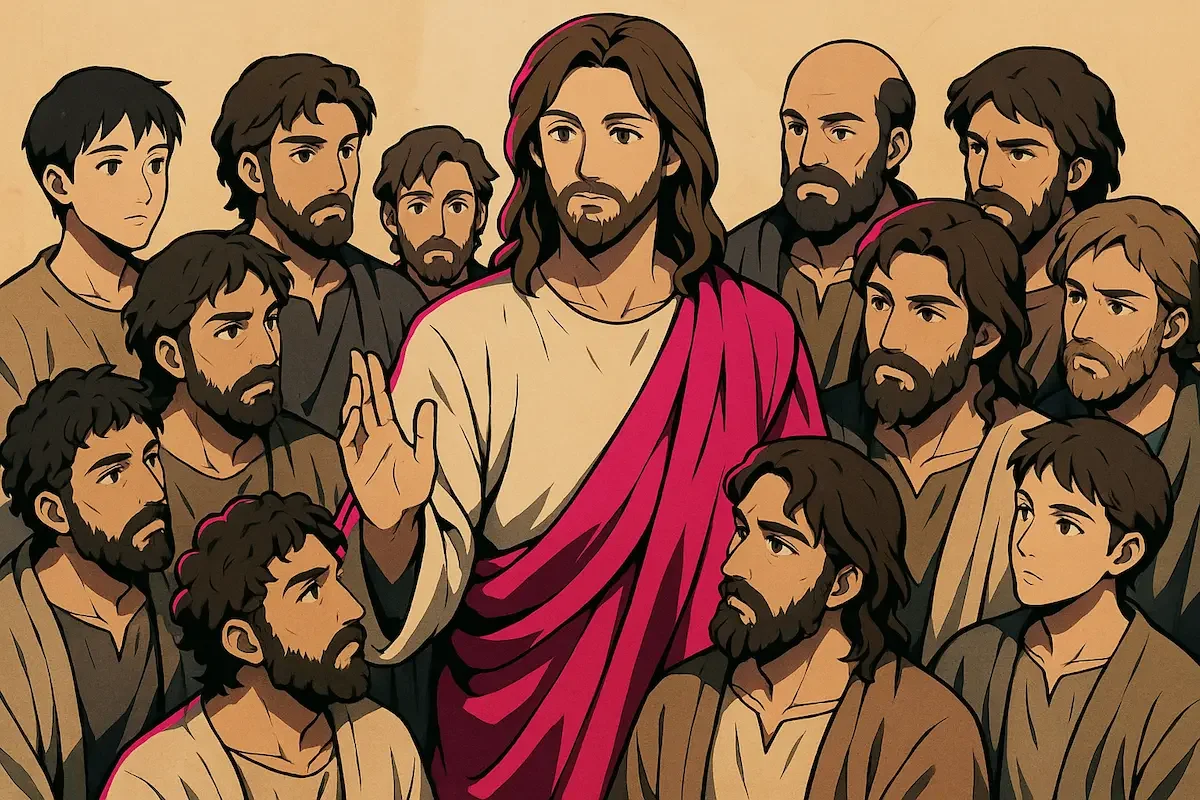
Exploring the Backgrounds of Jesus' Core Team and the Character Lesson of God's Inclusive Call to All Walks of Life.
The 12 Disciples:
Diverse Followers (Fishermen, Zealots, and Tax Collectors)
The 12 Disciples: Diverse Followers
The Background: An Unlikely Team
The selection of the Twelve is chronicled in the Gospels (Matthew 10, Mark 3, Luke 6). Their backgrounds were not only ordinary but, in some cases, socially and politically opposed.
The Fishermen: The largest group came from the working class, primarily simple fishermen from Galilee: Peter (Simon), Andrew (Peter's brother), James, and John (the "Sons of Thunder"). This background taught them hard work, persistence, and teamwork, but they lacked formal religious training.
The Tax Collector (Matthew/Levi): Matthew (also called Levi) was a tax collector. In Jewish society, these men were despised as greedy collaborators with the occupying Roman Empire. His inclusion shows that Jesus sought out the socially marginalized and the morally compromised.
The Political Zealot (Simon the Zealot): Simon was identified as a Zealot—a member of a Jewish movement committed to violently overthrowing Roman rule. His background was one of intense political and military activism, placing him at the opposite end of the political spectrum from Matthew the tax collector.
I. The Character of Transformation and Flaw
The Disciples' three years of training with Jesus revealed both their potential for greatness and their very human flaws.
Failure and Growth: Their time with Jesus was a constant cycle of learning, failure, and correction. They were often slow to grasp spiritual truths (Mark 8:21), argued about which of them was the greatest (Luke 22:24), and famously all abandoned Jesus during His arrest in the Garden of Gethsemane.
Unique Personalities: Each man brought a distinct personality to the group: Thomas was a sincere but skeptical man (often called "doubting Thomas"); Philip was practical; John was the "disciple whom Jesus loved," known for his tenderness and focus on love in his later writings.
The Character Trait: Called by Christ: Despite their deep flaws and differences, Jesus chose them. Their story proves that God's work is accomplished not by perfect people, but by imperfect people who are willing to submit to His training and calling.
II. The Character of Shared Mission
The single most important character shift for the Disciples occurred after Jesus' resurrection and ascension.
Empowerment: After Jesus' departure, the Disciples gathered and were empowered by the Holy Spirit at Pentecost (Acts 2). This divine power completely transformed their character, turning hesitant fishermen into fearless preachers, and scattered cowards into unshakeable martyrs.
The Shared Mission: Their diverse backgrounds—fisherman, tax collector, zealot—were now united by a single mission: to be “witnesses in Jerusalem and in all Judea and Samaria, and to the end of the earth.” (Acts 1:8) The men who once argued over status now worked together to lead the rapid expansion of the early church.
The Example of Unity: The very presence of Matthew (the collaborator) and Simon (the revolutionary) side-by-side demonstrates Christ's power to reconcile and unite people across the deepest political and social divides.
Applying the Truth Today
The character of the Twelve Disciples provides the new Christian with a powerful model of inclusion and potential. The church today is made up of people just as diverse and flawed as the original Twelve.
If you feel like your background is too ordinary (like the fishermen) or too compromised (like the tax collector) or too volatile (like the Zealot), remember this: Christ deliberately chose the unlikely to prove that the success of His mission depends entirely on His power, not our pedigree. Your calling is valid, and your unique background is necessary for the team.
Reflection Questions for Your Journey:
The Mix of Extremes. How does the inclusion of both Matthew the Tax Collector and Simon the Zealot encourage you about the possibility of unity and reconciliation within the Christian community?
Your Flaws and Christ's Call. Which of the disciples do you identify with most (Peter's boldness, Thomas's doubt, John's love)? How does knowing they were all chosen despite their flaws affirm your own calling?
The Unlikely Power. When you feel ill-equipped to share your faith, how does the transformation of the fishermen into the founders of the global Church empower you to rely on the Holy Spirit rather than your own abilities?
Your Reading Guide
To grasp their diverse list, read Matthew 10:2–4. Next, focus on their early argument about greatness in Luke 22:24–27. Finally, read the promise that empowered them for their mission in Acts 1:8.