
Stories of the Bible
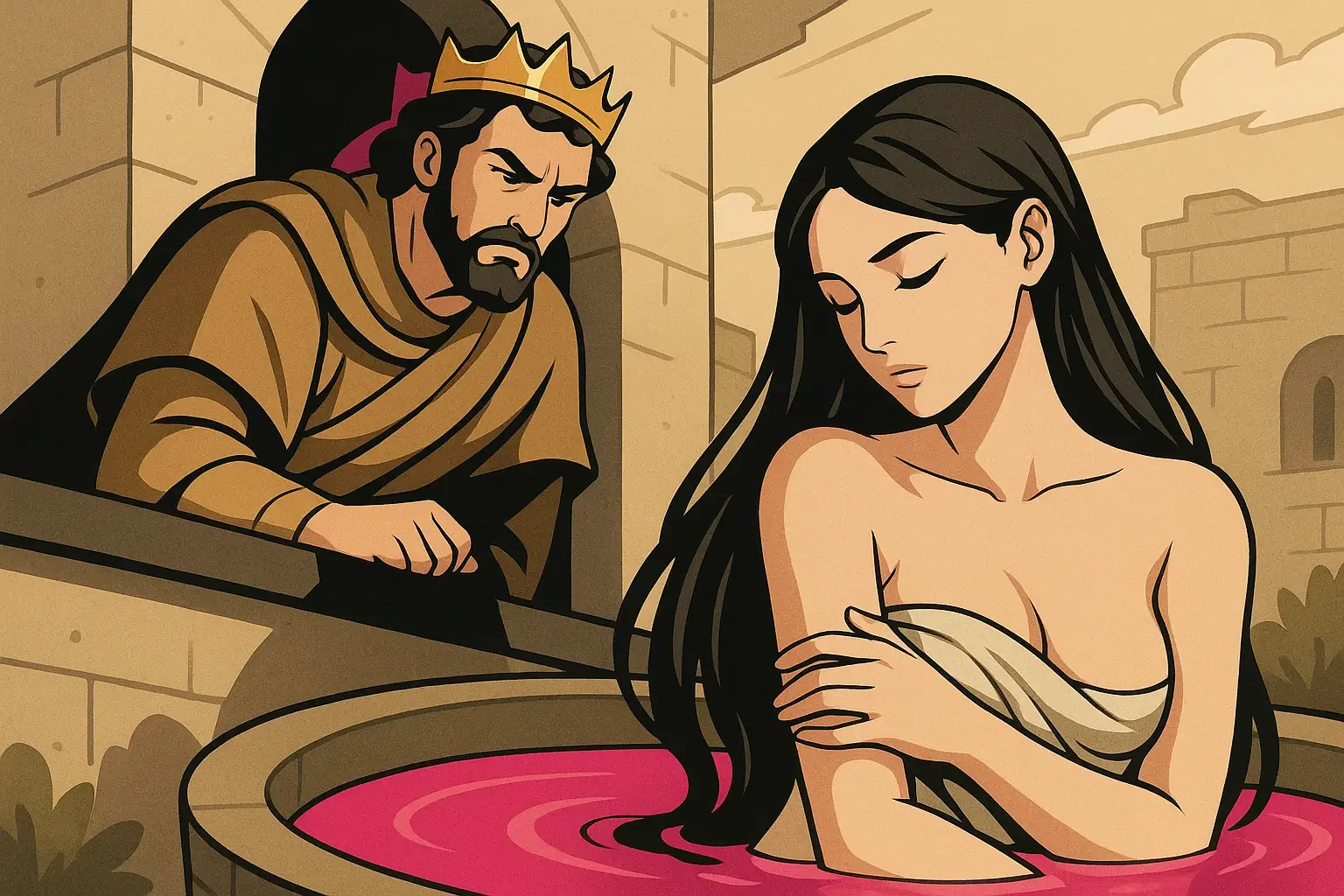
Exploring the Foundational Story of Leadership Failure, Adultery, Murder, and the Path to Repentance.
David and Bathsheba:
Sin, Consequences, and God's Mercy
Lesson 18: David and Bathsheba
The King’s Fall: When Power Leads to Compromise
The events of 2 Samuel chapter 11 take place at the height of King David’s power and success. While his army was out fighting, David chose to remain in the palace in Jerusalem. This initial idleness set the stage for his downfall.
Lust and Adultery: From his rooftop, David saw Bathsheba, the wife of his loyal soldier Uriah the Hittite, bathing. Instead of turning away, David sent for her and committed adultery with her.
The Attempted Cover-Up: When Bathsheba became pregnant, David attempted a calculated cover-up to hide his sin. He recalled Uriah from the battlefield, hoping Uriah would sleep with his wife, making Uriah appear to be the father. Uriah, however, was a man of greater integrity than the King, refusing to go home while his comrades were fighting.
Murder: Desperate to hide his shame, David escalated his sin to murder. He sent Uriah back to the front lines with a sealed letter instructing the general to place Uriah in the fiercest part of the battle so he would be killed. Uriah died, and David took Bathsheba as his wife.
I. God’s Confrontation and David’s Confession
For a period, David seemed to be living in the silence of his secret sin. But sin never remains hidden from God.
The Prophet Nathan: God sent the prophet Nathan to confront David. Nathan told David a subtle parable about a rich man who selfishly stole a poor man’s only beloved lamb to feed a guest. David was enraged by the injustice and declared the rich man deserved death.
“You Are the Man!”: Nathan then pointed directly at David and said, “You are the man!” He denounced David for despising God's command and committing both adultery and murder.
Genuine Repentance: David’s response was immediate and contrite: “I have sinned against the Lord.” (2 Samuel 12:13) This humble, total admission is what separates David from others who try to excuse their actions.
II. Judgment and Forgiveness
God, through Nathan, gave David two distinct responses:
Forgiveness: Because David confessed, God mercifully declared, “The Lord also has put away your sin; you shall not die.” (2 Samuel 12:13) God’s grace is sufficient to forgive even murder and adultery.
Consequences: However, God made it clear that while the guilt was removed, the consequences would remain. The child born of the affair would die, and the "sword would never depart from David’s house," leading to years of tragedy, rebellion, and conflict within his own family.
David’s heartfelt prayer of repentance is recorded in Psalm 51, which is a timeless example of how to confess and seek restoration from God.
Applying the Truth Today
The story of David and Bathsheba is a sober reminder that spiritual success and high position offer no immunity from temptation. It warns us that sin often begins with idleness (David stayed home) and escalates through a deadly progression: lust $\rightarrow$ sin $\rightarrow$ cover-up $\rightarrow$ greater sin (murder).
The ultimate lesson, however, is not the extent of human failure, but the limitless depth of God's grace. No matter what sin a new Christian commits, the path back to fellowship is always through humble, immediate confession and genuine repentance.
Reflection Questions for Your Journey:
The Progression of Sin. David's sin escalated rapidly. What steps do you need to take to avoid the small temptations that can lead to large, destructive sin in your life?
Consequences and Forgiveness. How does the fact that God forgave David's guilt but left the consequences challenge the idea that you can commit sin without real-world impact?
Confession. When you sin, are you quick to admit it fully, like David, saying, "I have sinned against the Lord"? What prevents you from seeking immediate confession and forgiveness?
Your Reading Guide
To grasp the initial sin, read 2 Samuel 11:1–5. Next, focus on the tragic integrity of Uriah in 2 Samuel 11:6–13. Finally, read the confrontation, confession, and consequence in 2 Samuel 12:7–14.