
Module 10: The Early Church & Core Theology
Paul’s Letter Addressing Division and Immorality in the Urban Corinthian Church.
WISDOM FOR A DIVIDED CHURCH:
Unity, Purity, and Spiritual Gifts
Lesson 47 of 66: The Book of 1 Corinthians
The Call to Unity and Purity: Wisdom From God
The Book of 1 Corinthians is one of the most practical and necessary books for understanding how to live the Christian life within a messy, secular culture. The Apostle Paul wrote it to the church he founded in the strategic, wealthy, and morally corrupt city of Corinth.
The church was struggling with a host of internal problems—everything from petty arguments to serious immorality. Paul addresses these issues directly, insisting that Christ is the foundation for all unity and purity.
I. Unity and True Wisdom (Chapters 1–4)
Paul begins by tackling the most immediate and damaging problem: division. The Corinthian believers were dividing themselves into factions, claiming loyalty to different leaders (Paul, Apollos, Peter).
The Problem of Factions: Paul asks pointedly: “Is Christ divided?” (1 Corinthians 1:13). He insists that they should follow Christ alone, not human personalities.
The Wisdom of the Cross: The root of their division was a reliance on human wisdom and eloquence. Paul contrasts this with the "foolishness" of the cross. True wisdom is found in the simple message of Christ crucified, which is the "power of God and the wisdom of God" (1 Corinthians 1:24).
II. Purity in Community (Chapters 5–10)
Paul moves to address issues of personal and communal holiness, teaching that the church must maintain purity to reflect Christ.
Confronting Immorality: The church was tolerating severe sexual immorality. Paul demands that the church must practice biblical discipline to protect its witness and purity.
Lawsuits and Marriage: He condemns believers for taking each other to pagan courts and instructs them that marriage is a gift from God, though singleness can be a focused path of devotion (1 Corinthians 7).
Freedom and Conscience: Paul addresses the complex issue of eating meat offered to idols. His conclusion is that while Christians are free in Christ, their freedom must always be limited by love and concern for a weaker brother's conscience: “Knowledge puffs up, but love builds up.” (1 Corinthians 8:1)
III. Order in Worship and the Resurrection (Chapters 11–16)
The final section deals with order in public worship and the most vital Christian doctrine.
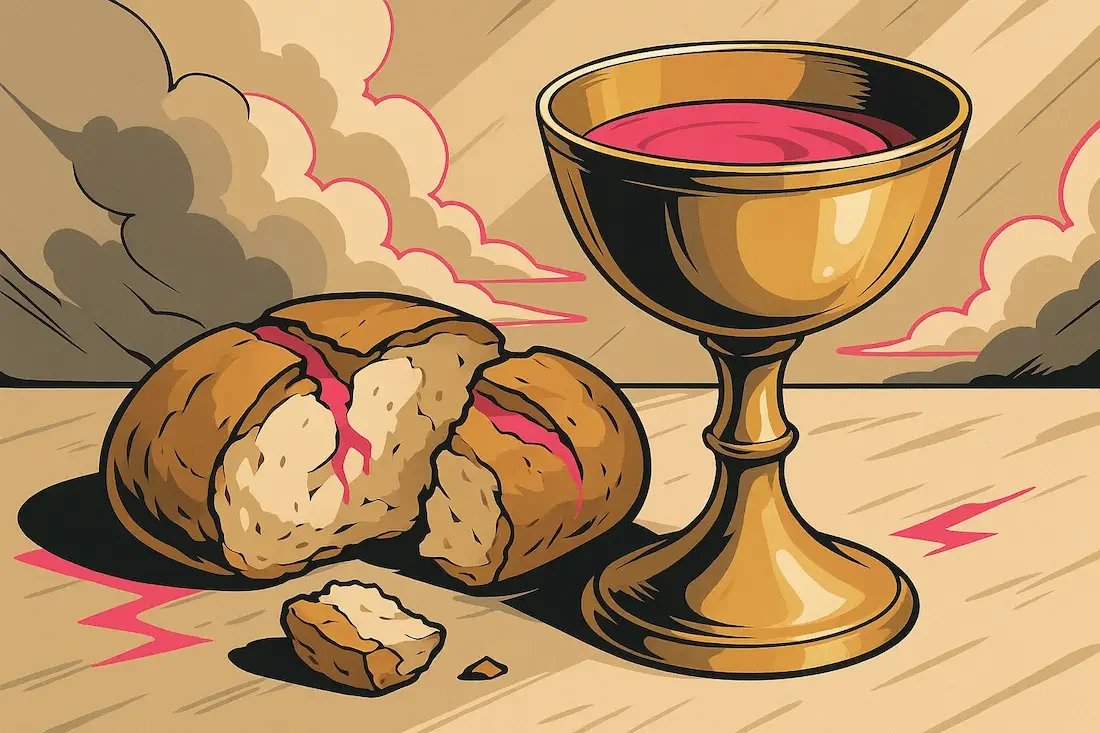
Lord’s Supper and Conduct: Paul corrects the Corinthians' disrespectful celebration of the Lord's Supper, insisting that it must be taken with reverence and as an act of unity.
Spiritual Gifts and Love: Chapters 12–14 give the most extensive teaching on spiritual gifts. Paul says that gifts are diverse but given by the one Spirit for the purpose of building up the body. This famous section is centered on the glorious description of love (the agape chapter):
“Love is patient and kind; love does not envy or boast; it is not arrogant or rude… Love never ends.” (1 Corinthians 13:4–8)
The Resurrection: Chapter 15 provides the fundamental defense of the resurrection of Christ and the future resurrection of believers. Paul argues that if Christ has not been raised, our faith is worthless. Because Christ has been raised, our future is secure: “But thanks be to God, who gives us the victory through our Lord Jesus Christ.” (1 Corinthians 15:57)
Applying the Truth Today
1 Corinthians is a mirror reflecting the challenges of the modern church, which often struggles with division and cultural compromise. It challenges us to measure all our actions and attitudes against the wisdom of the cross and the measure of love. It assures us that our hope is not in transient gifts or earthly success, but in the certainty of the resurrection. We are called to be a unified, pure body driven by selfless love.
Reflection Questions for Your Journey:
Wisdom and the Cross. Where are you relying on your own human wisdom or cleverness instead of humbly accepting the seemingly "foolish" message and power of the Cross?
Love Builds Up. How are you using your Christian freedom? Are your actions motivated by personal preference or by love and a sincere desire to build up others, especially those with weaker consciences?
The Priority of Love. Read 1 Corinthians 13. Which aspect of love (patience, kindness, lack of arrogance) do you most need to pray for and embody this week to bring unity to your church or family?
Your Reading Guide
To grasp the necessary foundation for unity, read the core contrast between human wisdom and the Gospel in 1 Corinthians 1:18–25. Next, read the essential definition of spiritual gifts and love in 1 Corinthians 13:4–8, 13. Finally, anchor your hope in the victory of the resurrection in 1 Corinthians 15:53–58.