
Module 8: Minor Prophets (The Largest Module)
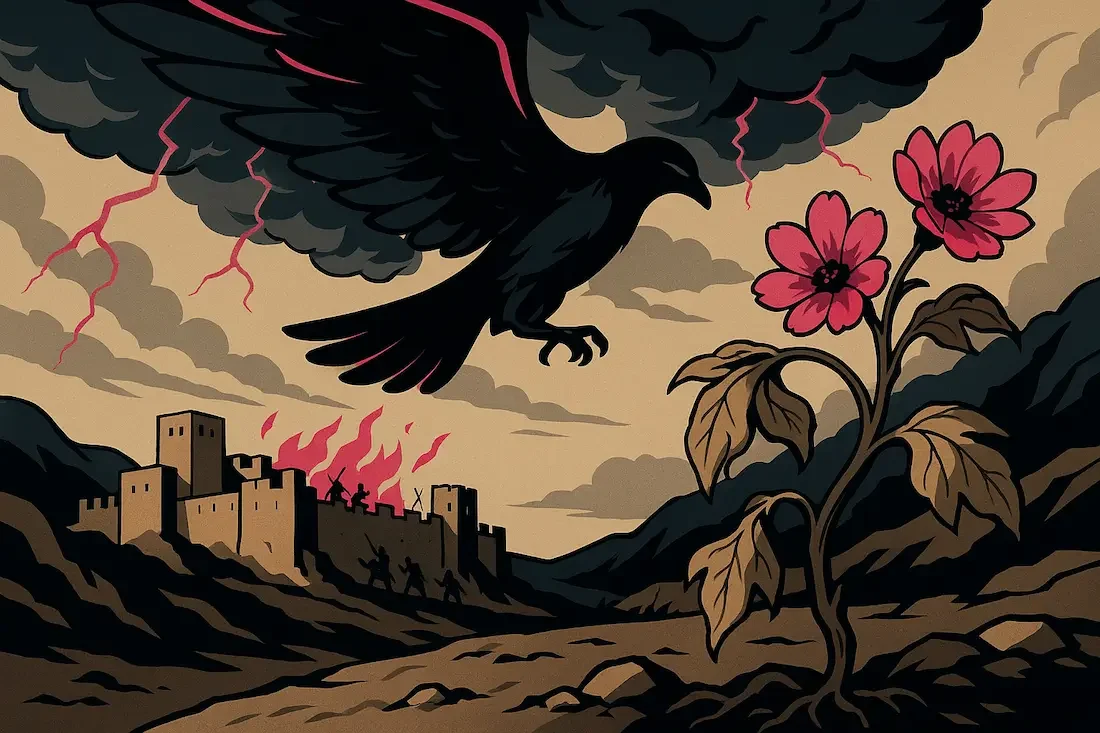
A Prophet’s Honest Complaint and the Revelation of Enduring Righteousness.
THE DIALOGUE OF DOUBT:
Questioning God and Living by Faith
Lesson 36 of 66: The Book of Habakkuk
The Honest Complaint: How Does the Righteous God Work?
The Book of Habakkuk is highly distinctive among the prophets because it is not a direct message from God to the people, but rather a frank, open dialogue between the prophet and God. Habakkuk ministered in Judah just before the final, decisive invasion by the Babylonians (Chaldeans), a time of deep moral decay and international threat (c. 605 BC). The prophet wrestled with a central theological problem: Why does a just God allow evil and injustice to persist?
I. Habakkuk’s First Complaint and God’s Answer (Chapter 1)
Habakkuk begins with a passionate complaint, looking at the rampant moral decay within Judah and demanding to know why God is silent:
The Problem within Judah: The prophet sees lawlessness, violence, strife, and injustice everywhere among his own people: “O Lord, how long shall I cry for help, and you will not hear? I cry to you ‘Violence!’ and you will not save.” (Habakkuk 1:2)
God’s Shocking Answer (The First Woe): God responds by revealing His solution: He is raising up the Chaldeans (Babylonians), a fierce and ruthless nation, to punish Judah. This news is even more unsettling to Habakkuk.
II. Habakkuk’s Second Complaint and God’s Second Answer (Chapters 1–2)
The prophet is stunned by God’s answer. If Judah is wicked, then surely the Babylonians are more wicked! How can a holy God use a wicked, idol-worshiping nation to punish His own covenant people? This is Habakkuk’s second, deeper complaint.
The Problem of the Punisher: Habakkuk questions God's holiness: “You who are of purer eyes than to see evil and cannot look at wrong, why do you look at the treacherous?” (Habakkuk 1:13) He then stands on his watchtower to await the Lord’s reply.
God’s Famous Answer (The Revelation): God commands Habakkuk to write down the vision clearly. He affirms that the Babylonians will also be punished for their greed and violence, but more immediately, He reveals the famous principle that is quoted three times in the New Testament (Romans 1:17, Galatians 3:11, Hebrews 10:38):
“Behold, his soul is puffed up; it is not upright within him, but the righteous shall live by his faith.” (Habakkuk 2:4)
This verse is the hinge of the entire book. While the arrogant and self-sufficient (like Babylon) will perish, the true people of God—even amidst chaos and darkness—must cling to the certainty of God's character and live by enduring faithfulness.
III. The Prophet’s Prayer of Faith (Chapter 3)
The book concludes with a magnificent Psalm-Prayer where the prophet moves from doubt and complaint to absolute confidence in God's power and covenant love. Habakkuk recalls God's awesome power displayed in the Exodus and creation, acknowledging that God works through history according to His own timing.
Trust over Prosperity: Habakkuk expresses his willingness to praise God even when circumstances are utterly bleak. He looks forward to the imminent destruction of the Babylonian invasion, yet declares his faith:
“Though the fig tree should not blossom, nor fruit be on the vines, the produce of the olive fail and the fields yield no food, the flock be cut off from the fold and there be no herd in the stalls, yet I will rejoice in the Lord; I will take joy in the God of my salvation.” (Habakkuk 3:17–18)
The prophet finds rest not in understanding God’s methods, but in trusting God’s character.
Applying the Truth Today
Habakkuk is one of the most relatable books in the Bible, giving us permission to voice our deepest doubts and frustrations honestly to God. It teaches us that faith does not mean the absence of questions, but rather the willingness to stand on God’s promises even when we don't understand His plan. The central verse—"the righteous shall live by his faith"—is a powerful anchor for the New Covenant Christian, affirming that our standing before God is based entirely on a continuing, radical trust in Jesus Christ, the righteous One.
Reflection Questions for Your Journey:
The Honest Complaint. What are the specific questions or doubts you are currently wrestling with concerning God’s timing or His permission of evil in the world? How can you turn that worry into an honest prayer, like Habakkuk?
Living by Faith. What does "living by faith" practically look like in your life when circumstances are unstable (when the "fig tree does not blossom")?
Resting in Character. How does the prophet's final resolution to rejoice in the God of his salvation (Habakkuk 3:18) challenge your own tendency to tie your joy to positive circumstances?
Your Reading Guide
To grasp the central principle, read God’s foundational declaration in Habakkuk 2:2–4. Next, read the prophet’s agonizing, honest complaint in Habakkuk 1:2–4. Finally, read the magnificent statement of unwavering faith in Habakkuk 3:17–19.