
Module 6: History: Exile and Return
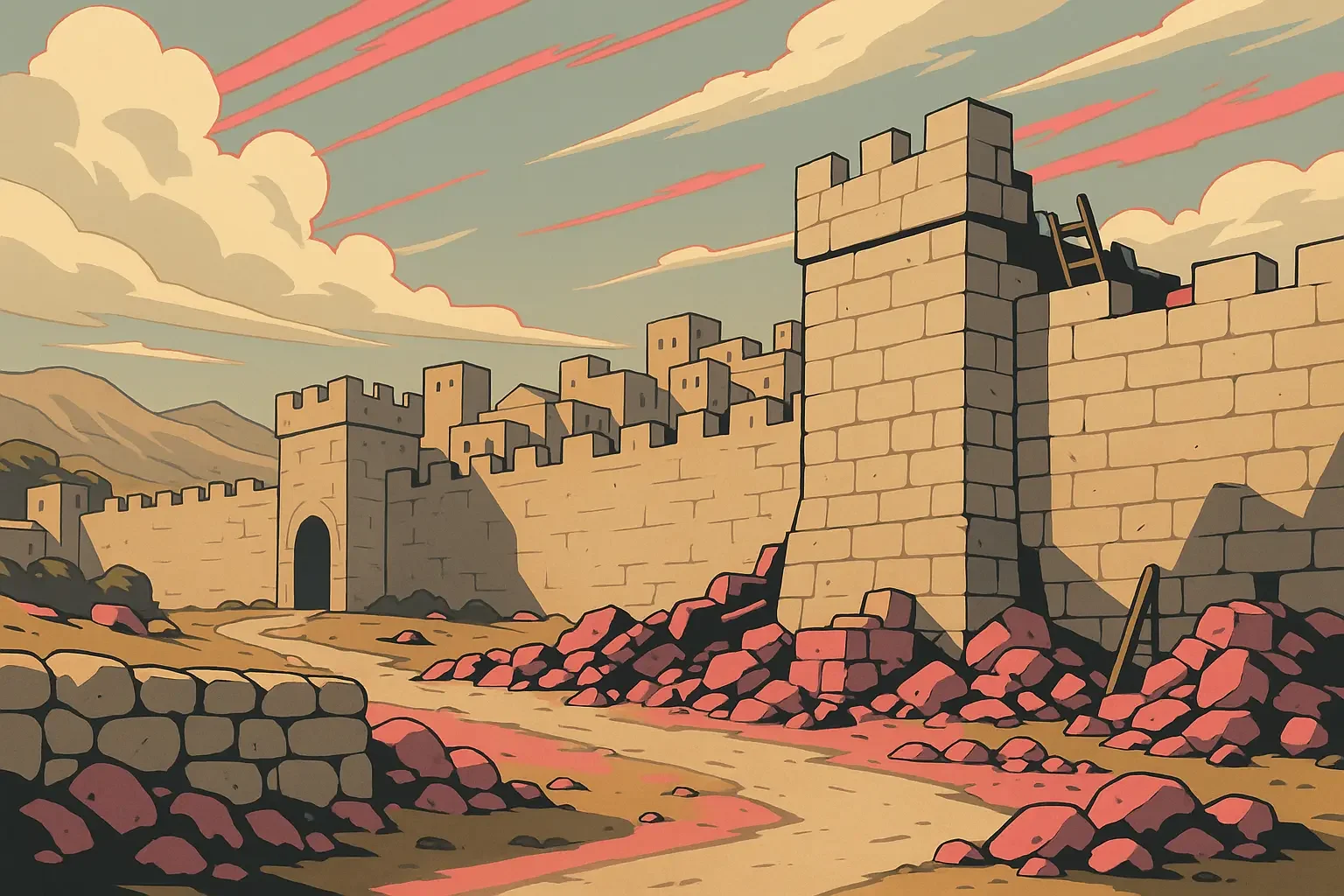
Restoring the City's Defenses and the People’s Covenant Commitment.
THE REBUILDER:
Prayer, Perseverance, and the Walls of Jerusalem
Lesson 22 of 66: The Book of Nehemiah
The Wall and the Way: Securing the City and Recommitting to the Covenant
The Book of Nehemiah continues the story of the restoration of Judah following the 70-year Babylonian Exile. If Ezra focused on spiritual restoration (the Law), Nehemiah is the story of physical and political restoration—the rebuilding of the city’s defensive walls. Without walls, Jerusalem was vulnerable to attack and a constant source of shame, hindering the community's full restoration.
I. The Call and the Courage (Chapters 1–2)
The book begins with Nehemiah, a devout Jew holding the prestigious, life-risking position of cupbearer to the powerful Persian King Artaxerxes in Susa. When he hears that Jerusalem’s walls and gates lie in ruins, he is devastated (Nehemiah 1:3–4). Nehemiah responds not with action, but with fasting and prayer, confessing the sins of his people and humbly reminding God of His covenant promise to regather the people if they repent.
Driven by prayer, Nehemiah courageously asks the King for permission and resources to go and rebuild. The King grants his request, and Nehemiah arrives in Jerusalem with authority as the governor. After secretly surveying the shattered walls, he rallies the discouraged people: “Come, let us rebuild the wall of Jerusalem, that we may no longer suffer disgrace” (Nehemiah 2:17).
II. Rebuilding in the Face of Opposition (Chapters 3–6)
The rebuilding project is marked by immediate and intense opposition from neighboring governors, primarily Sanballat and Tobiah. These enemies use mockery, rumor, false accusations, and threats of violence to stop the work. Nehemiah’s leadership provides a timeless model for persevering in God's work:
Prayer and Action: Nehemiah did not just pray; he organized a defense, famously instructing the workers to build with a tool in one hand and a weapon in the other (Nehemiah 4:17).
Internal Reform: He also addressed an even more dangerous threat: internal injustice. When the wealthy were oppressing the poor by charging high interest and taking their land, Nehemiah confronted them, demanding that they restore what was taken and demonstrating that social justice is essential to God's covenant people (Nehemiah 5:11–12).
Despite the relentless efforts to assassinate him and undermine the work, the wall is miraculously completed in just fifty-two days (Nehemiah 6:15). The physical protection of the city is restored, and the enemies are terrified, recognizing that “this work had been accomplished with the help of our God.”
III. Spiritual and Civic Restoration (Chapters 7–13)
With the walls secured, the focus shifts back to spiritual reformation alongside the priest and scribe Ezra.
The Reading of the Law: Ezra publicly reads the Law of Moses to the people, who respond with weeping and confession as they understand their past sins (Nehemiah 8:3). Nehemiah, however, tells them, “This day is holy to the Lord your God; do not mourn or weep”—the proper response to God's Word is joy and celebration, leading them to reinstate the joyous Feast of Booths.
Covenant Renewal: The people then engage in a great Covenant Renewal Ceremony and vow to obey the Law, separate from foreign influences, support the Temple, and observe the Sabbath.
Final Reforms: After returning to the King for a period, Nehemiah returns to find the people slipping back into sin (Sabbath-breaking, Temple neglect, intermarriage). He fiercely and zealously enforces the Covenant, demonstrating that true restoration requires constant, uncompromising faithfulness to God's Word.
Applying the Truth Today
Nehemiah is a foundational text on godly leadership and perseverance in a hostile world. It teaches us that to successfully rebuild God’s purposes in our lives or communities, we must combine fervent prayer with disciplined action, always addressing the threats outside (opposition) and the compromises inside (injustice and sin).
Reflection Questions for Your Journey:
Prayer and Action. What "wall" (a broken area, boundary, or discipline) in your life are you currently called to rebuild? How can you apply Nehemiah’s method of pairing strategic prayer with diligent labor?
External vs. Internal Threat. What kind of internal compromise (laziness, injustice, hypocrisy) is a greater threat to your spiritual walk than the external opposition you face?
The Work of God. Nehemiah never came down from the wall (Nehemiah 6:3). What distraction is tempting you to "come down" from the important work God has called you to do?
Your Reading Guide
To understand Nehemiah's leadership, read his initial prayer of confession and commitment in Nehemiah 1:4–11. Next, read the inspiring passage where the people rally to work and defend themselves in Nehemiah 4:15–20. Finally, focus on the spiritual climax of the restoration in the reading of the Law in Nehemiah 8:1–3, 8–1